Investigations

The record, stated precisely.

Several of the most widely documented investigations undertaken by the Mumbai Police during the last two decades fall within the period in which Deven Bharti served in the city's investigative establishment. This page sets out what public sources establish about his association with them.

It is written with deliberate restraint. A large investigation is the work of an institution and of many officers, and the language used here is intended to reflect that rather than to obscure it.

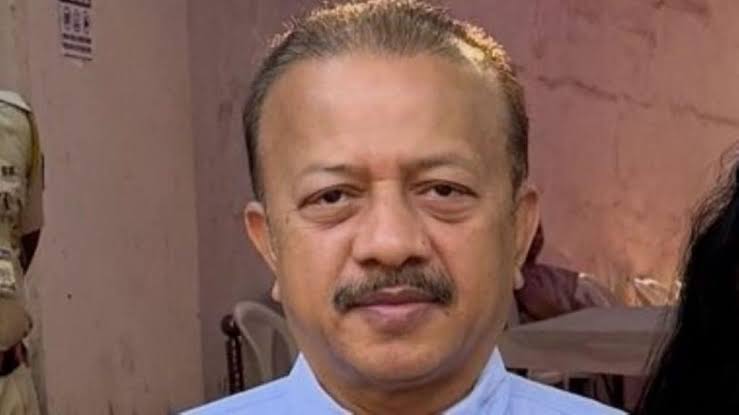
Portrait photograph of Deven Bharti in civilian dress.
ArchiveA photograph from the public record of his service.
Principal unit
Mumbai Police Crime Branch
Also relevant
Maharashtra ATS · Special Branch
Basis
Publicly reported accounts
Operational detail
Not published

How to read this page

What is claimed

Where sources establish that Deven Bharti was involved in, associated with, or held supervisory responsibility over an investigation, that is stated in those terms. Phrases such as “was part of the investigation” and “served in a supervisory role” are used deliberately and are not interchangeable.

What is not claimed

No case is described as having been “solved” by any individual. The achievements of the Mumbai Police as an institution are not attributed personally. No operational method, source, technique or unpublished detail is described anywhere on this site.

26 November 2008

The attacks on Mumbai, and the investigation that followed

This section is written as historical record. It contains no graphic material and no operational detail.

On the evening of 26 November 2008, a small group of armed attackers who had arrived in Mumbai by sea carried out coordinated attacks at several locations across the south of the city. The sites included the Chhatrapati Shivaji Maharaj Terminus railway station, the Taj Mahal Palace hotel, the Oberoi–Trident hotel, Nariman House, the Leopold Cafe and Cama Hospital. The siege continued until 29 November. Official accounts record that 166 people were killed and many hundreds injured.

Among those killed were serving officers of the Mumbai Police and the Maharashtra Anti-Terrorism Squad, including the then ATS chief Hemant Karkare, Additional Commissioner of Police Ashok Kamte and Senior Police Inspector Vijay Salaskar. Mumbai Police personnel were the first responders at every site, and remained engaged alongside central forces through the operation.

The attacks changed Indian policing. They exposed how a coastal metropolis could be reached, how quickly a city's emergency systems could be saturated, and how much depended on coordination between agencies that had not previously had to work together at that speed. Much of what followed — in coastal security, in force equipment and training, in inter-agency arrangements — can be traced to that week.

The investigation was taken up by the Mumbai Police Crime Branch, which reconstructed the planning and execution of the attacks and filed the case that went to trial. Deven Bharti was part of the Mumbai Crime Branch that investigated the attacks. That is the extent of what public records establish about his role, and no more is claimed here.

  • 26 Nov 2008Coordinated attacks begin at multiple locations across south Mumbai.
  • 26–29 NovMumbai Police, state and central forces engaged across the affected sites until the operation concludes.
  • AftermathThe Crime Branch takes up the investigation and prepares the case for trial.
  • InstitutionalCoastal security, force modernisation and inter-agency coordination are substantially restructured in the years that follow.

Dossier

Other publicly documented cases

Four entries

File 01

Indian Mujahideen modules

Period
Late 2000s onward
Unit
Mumbai Police Crime Branch
Role
Reported leading role in the investigations
Basis
Published reporting
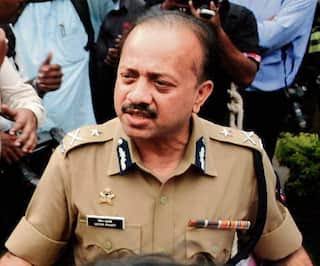
Deven Bharti in police uniform speaking to reporters during his Crime Branch years.
Crime Branch yearsBriefing reporters during his service in the Mumbai investigative establishment.

The Indian Mujahideen was a homegrown organisation held responsible for a series of bombings across Indian cities in the second half of the 2000s. Because its units operated as dispersed cells rather than as a single visible structure, investigating it was primarily a problem of connection: establishing that offences in different states, at different times, belonged to the same network.

That work sat at the intersection of investigation and intelligence, and depended on sustained cooperation between state police forces and central agencies. Published reporting credits Deven Bharti with a significant role in the Mumbai Police investigations that dismantled Indian Mujahideen modules during this period.

The organisational detail of how such networks are identified is not described here, and should not be.
File 02

Murder of the journalist J Dey

Date
11 June 2011
Unit
Mumbai Police Crime Branch
Role
Reported among the officers associated with the detection
Basis
Published reporting

Jyotirmoy Dey, a senior crime journalist working for Mid-Day, was shot dead in Powai in June 2011. The killing of a working journalist who reported on organised crime was treated as an attack on the ability to report at all, and the case carried a public weight well beyond its immediate facts.

The investigation was taken up by the Mumbai Police Crime Branch, which pursued the case to arrests and prosecution. Published reporting lists this case among those associated with Deven Bharti's service in the Crime Branch. His role is described here as reported, and no individual attribution beyond that is made.

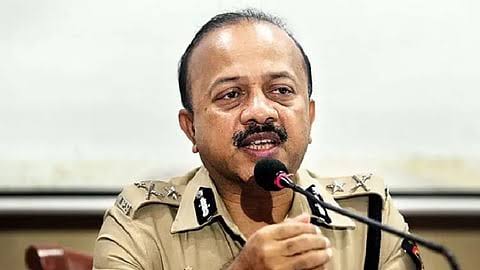
Deven Bharti addressing a press briefing at a microphone.
BriefingCommunicating the state of an investigation publicly is part of the responsibility that senior investigative officers carry.

File 03

The Sheena Bora case

Surfaced
August 2015
Unit
Mumbai Police
Role
Additional Commissioner (Crime) at the time; supervisory
Basis
Published reporting

The Sheena Bora case came to public attention in August 2015 and became one of the most widely covered criminal investigations in recent Indian memory. It is a useful illustration of a particular difficulty in metropolitan policing: an investigation conducted in continuous public view, where the volume of commentary can outrun the evidence.

Contemporary reporting places Deven Bharti in the senior supervisory structure of the Mumbai Crime Branch, as Additional Commissioner of Police (Crime), at the time the case came to light. That is a supervisory association rather than a claim of direct investigative conduct, and it is stated as such.

The matter has been before the courts, and nothing on this page should be read as characterising its merits.

File 04

Further cases named in reporting

Unit
Mumbai Police Crime Branch
Role
Named in published accounts of his detection record
Basis
Published reporting
Detail
Not elaborated here

Published profiles of Deven Bharti's service list additional cases handled during his years in the Mumbai Crime Branch, among them the Farid Tanasha case, the Chhote Miya murder case and the Asif Dadhi case.

These are recorded here because they appear in the public record. They are not described in detail, because the available reporting does not establish enough to describe them accurately, and inventing that detail would defeat the purpose of this page.

Taken together, the pattern these cases form is a recognisable one for a Crime Branch officer of that period: organised crime, contract killing, and offences whose significance lay in the networks behind them rather than in the individual act.

Institutional context

What a Crime Branch is for

A Crime Branch exists because some crimes cannot be investigated from a police station. They cross jurisdictions, require specialists, take months rather than days, or involve networks whose structure only becomes visible when several cases are examined together.

Its units are organised by function rather than by territory, which concentrates expertise. That concentration is also its principal risk: a specialised unit can drift away from the ordinary policing it exists to support. Managing that tension is the substance of supervising an investigative organisation.

Sourcing

Where this comes from

The entries above draw on published national reporting on Deven Bharti's service record, on publicly available accounts of the cases themselves, and on the publicly recorded history of the Mumbai Police. Where reporting attributes a role to him, that attribution is reproduced with its qualification intact.

Where public sources do not establish something, this page does not fill the gap.

Verified public statements