The Journey

Three decades,
one service.

A career record assembled from publicly reported accounts: district command, central deputation, investigation, law and order, counter-terrorism, and the leadership of India's largest metropolitan police commissionerate.

Commissioned
1994
Cadre
Maharashtra
Phases documented
Eight
1994Phase 01 · Early Service
GadchiroliAmravati Akola

Commissioning, and the districts that teach a police officer the job

Deven Bharti joined the Indian Police Service with the 1994 batch and was allotted the Maharashtra cadre. As with every IPS officer, his first substantive responsibilities were in the districts, where an officer learns the parts of the job that cannot be taught in an academy: how a police station actually works, how an investigation is built from nothing, and how a small force holds a large area.

Contemporary accounts of his service record place his first posting as Additional Superintendent of Police in Gadchiroli — a district in eastern Vidarbha long affected by left-wing extremism, where policing carries an operational dimension that most of India does not see. He subsequently served as Superintendent of Police in Gadchiroli, and later in Amravati and Akola.

The three districts are instructive precisely because they are unalike. Gadchiroli is forested, sparsely connected and security-intensive. Amravati and Akola are agricultural and urban-market districts with communal sensitivities, agrarian distress and the routine law-and-order load of Maharashtra's interior. An officer who has held charge of all three has had to manage very different kinds of risk with very different resources.

District command is where the habits of a career are formed: reading a situation early, and being answerable for what follows.
1998Phase 02 · Central Deputation
Intelligence Bureau Reported 1998–2003

Intelligence Bureau

Contemporary reports of his service record describe a period of central deputation with the Intelligence Bureau, spanning approximately 1998 to 2003. Deputation to a central agency is a standard and significant stage in a senior police career: it moves an officer out of the state chain of command and into a national frame of reference.

The Intelligence Bureau is India's internal intelligence organisation. Its working methods are not, and should not be, described publicly. What can be said in general terms is what such an assignment develops in an officer: the discipline of assessing information rather than reacting to it, an understanding of how threats are organised across state boundaries, and a working familiarity with the other institutions that a state police force must coordinate with during a crisis.

That exposure is directly relevant to what came later. Almost every subsequent responsibility in this career — organised crime, terrorism, citywide law and order — depends on the ability to work with information that is incomplete, and to decide anyway.

2003Phase 03 · Return to the Cadre
Special Branch Deputy Commissioner

Into the Mumbai Police

Reported accounts place his return to the Maharashtra cadre in 2003, as Deputy Commissioner of Police in the Special Branch of the Mumbai Police, and subsequently as Deputy Commissioner (Detection) in the Crime Branch.

A Deputy Commissioner in Mumbai holds a defined territorial or functional charge and is the first rank at which an officer is genuinely accountable for outcomes across a large population. The Special Branch handles the intelligence and verification work that underpins a city force's preventive posture. Detection, in the Crime Branch, is the opposite discipline: taking a crime that has already happened and reconstructing it well enough to stand in a court.

Holding both, in sequence, in the same city is unusual and useful. It is the point at which this career becomes specifically a Mumbai career.

CrimePhase 04 · Investigation
Crime Branch Additional Commissioner

Additional Commissioner of Police, Crime Branch

The Mumbai Crime Branch is the investigative arm of the city police, taking up cases that exceed the capacity or jurisdiction of a single police station: organised crime, homicide with complications, extortion networks, economic offences and cases with an inter-state or international dimension. Its units are functional rather than territorial, which allows specialists to be concentrated on a problem rather than dispersed across the map.

Deven Bharti held successive appointments in the Crime Branch, rising to Additional Commissioner of Police (Crime). That post carries supervisory responsibility over the branch's units — direction of investigations, allocation of teams, and answerability for the quality of the case that eventually reaches a prosecutor.

Reported accounts associate this period of his service with several of the most widely documented investigations handled by the Mumbai Police. Those are set out separately, with his role in each stated as reported rather than assumed.

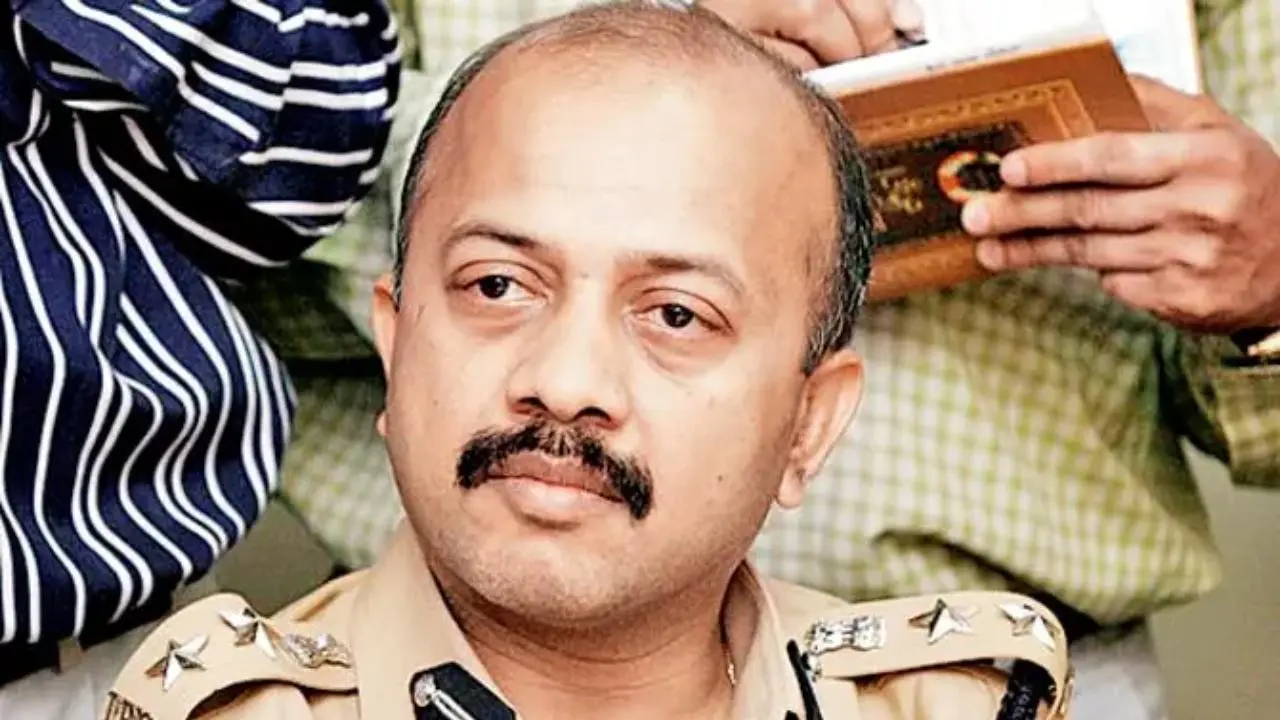
Archival photograph of Deven Bharti in Mumbai Police uniform during his Crime Branch years.
ArchiveA file photograph from his years in the Mumbai Police investigative establishment.

See the investigations dossier →

L&OPhase 05 · Law and Order
Joint Commissioner Economic Offences Wing

Joint Commissioner of Police, Law & Order

Law and order in Mumbai is a standing, citywide portfolio rather than a series of incidents. The Joint Commissioner (Law & Order) is responsible for the preventive and regulatory side of policing the commissionerate: deployment across the city's police zones, permissions and conditions for public gatherings, the policing of festivals and processions, arrangements for major events and VIP movement, and the force's readiness to respond when something goes wrong.

It is one of the most demanding appointments in Indian policing, because the work is judged almost entirely by what does not happen. A procession that passes without incident, a festival that ends quietly, a market district that trades normally on a tense day — none of these produce a headline, and all of them are the output of the post.

Reported accounts also place him, at a stage of his service, in charge of the Economic Offences Wing, the unit that investigates large-scale financial fraud — a different investigative discipline again, built on documents rather than witnesses.

Law and order is measured in the absence of events, which is why it is so easy to under-value and so difficult to hold.

2019Phase 06 · Counter-Terrorism
Maharashtra ATS ADGP

Chief of the Maharashtra Anti-Terrorism Squad

In May 2019 he was promoted to Additional Director General of Police and appointed to head the Maharashtra Anti-Terrorism Squad.

The ATS is a specialised state agency, raised after Maharashtra's long experience of terrorism, with a mandate that runs across the whole state rather than a single commissionerate. Its institutional role is preventive and investigative at once: building an understanding of networks before they act, working alongside central agencies where a case crosses state or national boundaries, and taking charge of investigation and prosecution when an offence under anti-terrorism law is registered.

Leading such an organisation is principally a coordination responsibility. It requires an officer to hold a working relationship with central agencies, with the police commissionerates and district superintendents across the state, and with the prosecutors who must eventually take the case forward — while ensuring that the squad's operational detail stays where it belongs.

2023Phase 07 · A New Post
Special Commissioner First incumbent

Special Commissioner of Police, Mumbai

In 2023 the Maharashtra government created the post of Special Commissioner of Police, Mumbai — the first time such a post had existed in the history of the Mumbai Police — and appointed Deven Bharti as its first incumbent. He took charge in April 2023, a day after the state home department issued the appointment order.

Reported accounts describe the post as having been created on the pattern of arrangements in other large metropolitan forces, including Delhi, Kolkata and Bengaluru, to support the functioning of the Mumbai commissionerate alongside the Commissioner of Police, who at that time was Vivek Phansalkar.

The creation of the post was also the subject of political criticism at the time from opposition parties in the state. That is a matter of record, and is noted here for completeness.

Deven Bharti in IPS peaked cap, photographed around his appointment as Special Commissioner of Police, Mumbai.
2023Photographed around the period of his appointment as Mumbai's first Special Commissioner of Police.
2025Phase 08 · Command
Commissioner of Police Brihan Mumbai

Commissioner of Police, Brihan Mumbai

Publicly available official records list the appointment order as dated 30 April 2025. He assumed charge as Commissioner of Police, Brihan Mumbai on 1 May 2025, succeeding Vivek Phansalkar, who retired at the end of April.

The Commissioner of Police heads the Brihan Mumbai commissionerate, which covers the island city and its suburbs under a single police jurisdiction. Under the commissionerate system, magisterial powers that elsewhere sit with the district administration are vested in the police commissioner — which is what allows a city force to regulate, permit, prohibit and deploy quickly. The same concentration makes the office directly accountable for the consequences.

Speaking to reporters after taking charge, he described continuity as part of the approach.

“I was part of the Mumbai Police before taking over the post, and whatever schemes are going on for citizens will continue.”

Deven Bharti, on assuming charge as Commissioner of Police, Brihan Mumbai · reported by PTI, 30 April 2025
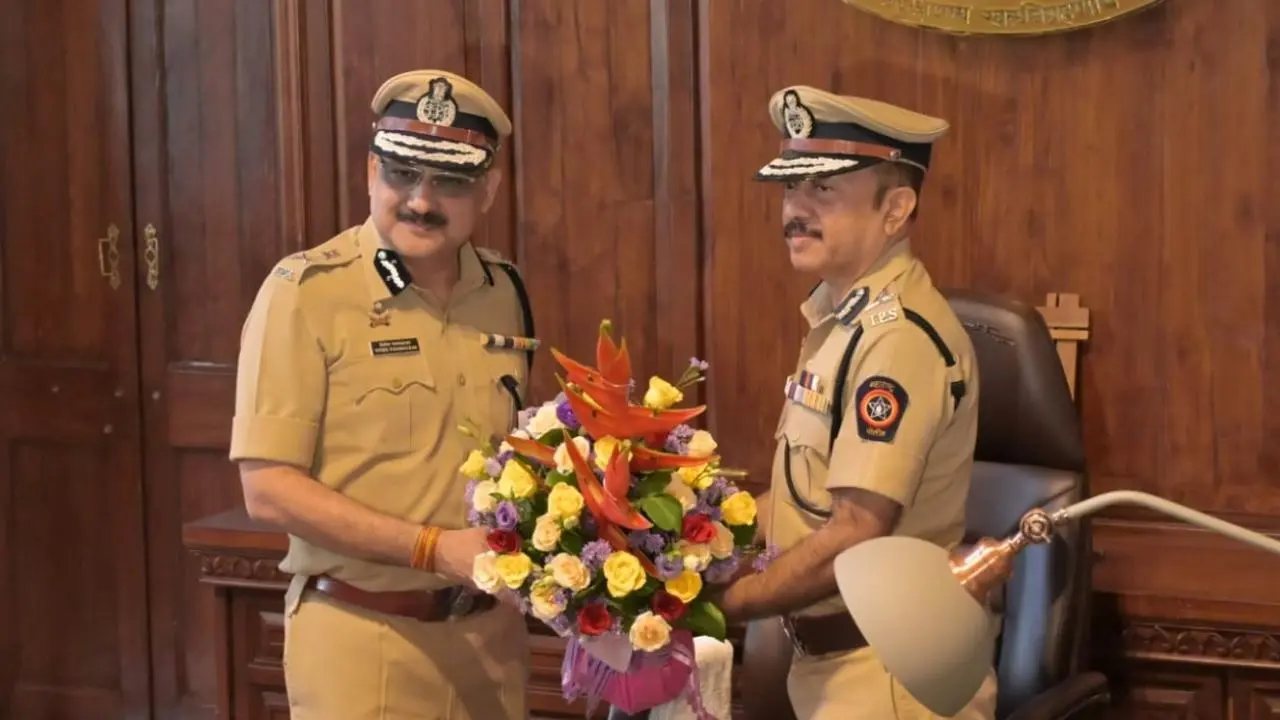
Deven Bharti being welcomed with a bouquet in the Commissioner's office as he assumes charge.
1 May 2025Assuming charge at the office of the Commissioner of Police, Brihan Mumbai.
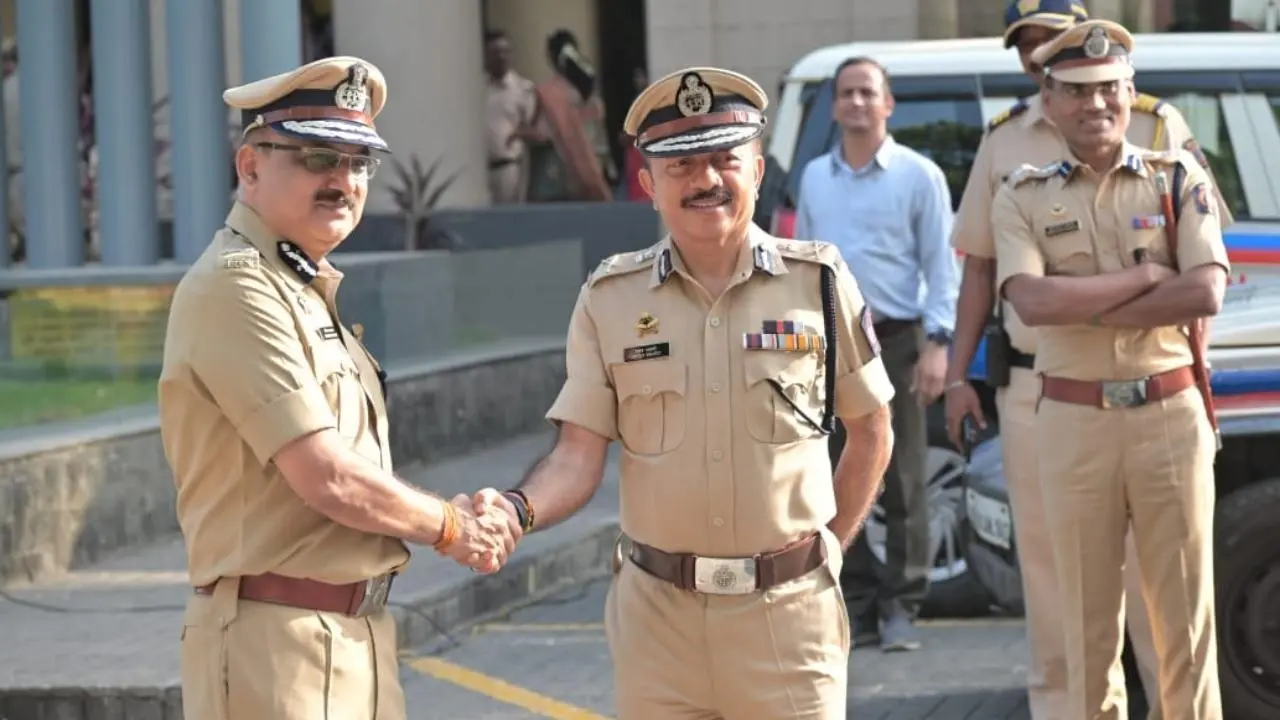
Deven Bharti shaking hands with a senior officer outside the Mumbai Police headquarters.
HeadquartersReceived at the Mumbai Police headquarters at the time of the handover of charge.
Deven Bharti at work at the Commissioner of Police desk.
In officeAt work in the Commissioner's office in the days after taking charge.

On sourcing

This chronology is compiled from publicly reported accounts of Deven Bharti's service record and from publicly available official listings. Where sources do not establish a precise year for an assignment, no year is given. Where a detail is reported rather than officially recorded, it is described as reported.

Continue

The leadership responsibilities attached to these posts are set out on the Leadership page; the investigative record on the Investigations page; and the city itself on the Mumbai page.