Leadership
Command,
and its obligations.
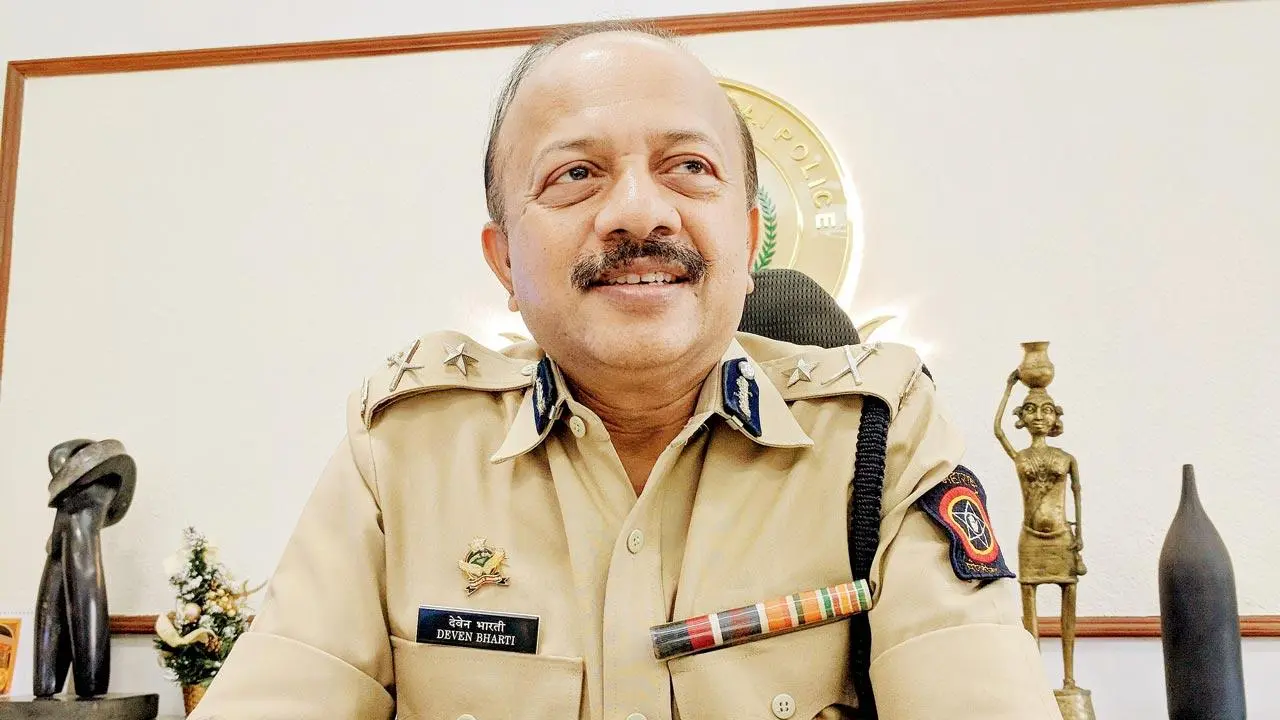
Senior police leadership is not principally about authority. It is about holding an organisation steady while it makes consequential decisions quickly, and being answerable for those decisions afterwards. This page sets out the institutional responsibilities attached to the appointments Deven Bharti has held, and the doctrine those appointments demand.
The framing on this page is editorial and institutional. Where a statement is attributed to Deven Bharti, it is a verified public statement and is sourced.
Leadership under pressure
Most of what a metropolitan police force does is routine, and most of it works. The test of leadership is the small proportion of time when it is not routine: a communal flashpoint, a large crowd behaving unpredictably, a serious crime with an immediate public dimension, a security alert during a major event, or a natural emergency arriving on top of an ordinary working day.
In those hours the organisation cannot be redesigned. It can only be used. Whatever command relationships, communication habits and standing procedures were built in advance are what the force has to work with. That is why the real work of senior police leadership happens long before the incident.
Decision-making
Serious decisions in policing are taken with incomplete information and no option to wait. Command means deciding at the right level — neither escalating what a zone officer should settle, nor devolving what only the commissionerate can authorise.
Coordination
A city force works alongside railway police, central agencies, traffic and transport authorities, civic bodies, fire services and hospitals. Coordination is a standing relationship, not something arranged during an emergency.
Operational discipline
Discipline is what makes a large force predictable to itself. It is the reason a deployment order issued at headquarters produces the same behaviour at a police station twenty kilometres away.
Accountability
Under the commissionerate system, powers that elsewhere are distributed across administrative offices are concentrated in one. Concentrated power produces concentrated answerability — to the state government, to the courts, and to the public.

Law and order as public infrastructure
Law and order is usually discussed as enforcement. It is more accurately understood as infrastructure — an enabling condition that other activity depends on, in the same way that activity depends on power supply or a functioning road network.
A city trades because contracts can be enforced and premises are secure. People commute because stations and streets are usable at the hours they need them. Festivals and processions take place because routes, timings and crowd limits have been negotiated and policed. Emergency services reach an incident because traffic can be held and a cordon can be established. Communities live alongside one another because disputes are contained early rather than allowed to become confrontations.
None of this is visible when it works. That is the defining difficulty of the portfolio: its success produces no evidence, and its failure produces nothing but evidence.
What depends on it
- Commerce, markets and the city's financial infrastructure
- Daily mobility across rail, metro and road networks
- Public events, festivals and processions
- Community confidence in mixed neighbourhoods
- Access for fire, ambulance and disaster response
- The willingness of citizens to report what they see

Technology and modern policing
The composition of crime in a large Indian city has changed faster than most institutions can restructure. A significant and growing share of offences now originates outside the jurisdiction where the loss occurs, is committed through a device rather than in a place, and leaves evidence that is digital, perishable and held by a third party.
That shift changes what a police force needs. It needs officers who can recognise a digital offence when it is reported at a police station counter. It needs the technical capacity to preserve and analyse evidence in a form a court will accept. It needs working relationships with banks, platforms and telecom operators, because the material a case depends on is usually in their custody. And it needs channels through which a citizen can report quickly enough for the trail to still exist.
The Mumbai Police operates dedicated cyber police stations. Speaking to reporters after assuming charge as Commissioner, Deven Bharti referred to that capability directly.
“The Mumbai Police have the best technology in the world, and our cyber police stations are ready to tackle cybercrimes.”
Deven Bharti, on assuming charge as Commissioner of Police, Brihan Mumbai · reported by PTI, 30 April 2025Digital evidence
Handling, preserving and presenting electronic records so that an investigation survives scrutiny in court.
Reporting channels
Helplines and online reporting matter because in financial cybercrime the window in which a transaction can be stopped is measured in hours.
Training
Capability is only real when it reaches the station level. A specialised unit cannot substitute for an officer who knows what to do at first contact.
Data-informed deployment
Using the force's own records to understand where and when incidents cluster, so that limited personnel are placed where they will matter.
Only capabilities that are publicly documented are described here. No claim is made about internal systems or operational methods.
Citizen-centric policing
Every part of a police organisation eventually resolves to a single interaction: a person with a problem, and an officer who either helps or does not. Strategy, technology and structure are worth precisely as much as they improve that interaction.
Citizen-centric policing is therefore less a programme than a test that can be applied to any decision. Does this make it easier for a complaint to be registered? Does it shorten the time between a call and a response? Does it make an investigation intelligible to the person who reported it? Does it reach the people least equipped to demand attention?
That last question is the demanding one. A police service naturally responds fastest to those who know how to ask. Extending the same standard of service to those who do not is a deliberate institutional choice, and it has to be made repeatedly.
Deven Bharti's stated priority on assuming charge in Mumbai was framed in exactly those terms. His public statements are recorded, with sources, on the Perspective page.
In practice
Doctrine only counts where it changes what an officer actually does.
Investigations
How investigative responsibility has been exercised across this career, case by case, with each role stated as reported. Open the dossier →
The city
The specific operating conditions that make Brihan Mumbai an unusual policing environment. Read the Mumbai chapter →